Surreal Before Surrealism: The Dreamlike World of Turkish Pottery and Anatolian Ceramics
How centuries of imagination shaped Turkish ceramics long before Surrealism had a name.
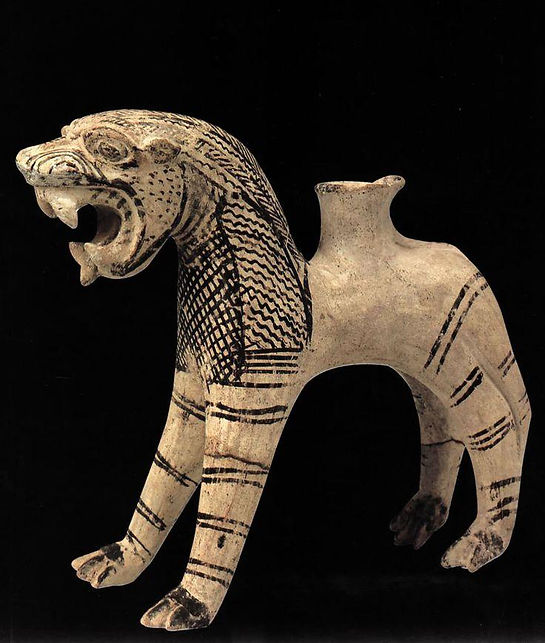
Walk through an archaeological museum in Türkiye and something curious begins to happen.
You pass rows of practical bowls, storage jars, cooking pots, and water vessels. They speak of everyday life: families, trade, harvests, and meals shared around the fire.
Then, almost unexpectedly, a pitcher stares back at you.
Its spout emerges from the beak of a bird.
Its handle curls into the horn of a ram.
A human face appears where you expected smooth clay.

Suddenly, what began as pottery becomes something else entirely.
To modern eyes, these objects can feel surprisingly surreal. They seem playful, mysterious, even dreamlike. Yet they were created centuries, and sometimes millennia, before Surrealism emerged as an artistic movement in twentieth-century Europe.

That doesn't make Turkish pottery surrealist. The artists who shaped these vessels were responding to their own beliefs, rituals, and folklore, not to modern art theory. What it does reveal, however, is something timeless: Anatolia has long embraced an imagination that comfortably moves between the real and the mythical.
Perhaps that is why Anatolian ceramics continue to feel so remarkably modern.
Turkish Pottery That Blurs the Line Between Utility and Imagination
One of the defining characteristics of Turkish pottery throughout history is its remarkable willingness to surprise.
Not every vessel was extraordinary. Most were beautifully practical. Archaeological collections across Türkiye are filled with simple bowls, amphorae, oil lamps, and storage jars designed for daily life.
But scattered among them are objects that seem to belong halfway between reality and imagination.

Bird-shaped pitchers.
Animal-headed rhyta used in ceremonies.
Jugs with exaggerated human faces.
Double-bodied vessels that challenge our expectations of symmetry.
Ceramic whistles shaped like horses.

Rather than separating sculpture from function, many Anatolian potters allowed the two to coexist. A vessel could carry water while telling a story. A pouring jug could also become a protective animal. An everyday object could quietly invite curiosity.
Centuries later, these forms still feel unexpectedly contemporary.
Nature, Mythology, and Folklore: The Endless Inspiration Behind Anatolian Ceramics
To understand Anatolian ceramics, we have to understand Anatolia itself.
This is a land layered with civilizations. Hittites, Phrygians, Urartians, Greeks, Romans, Seljuks, Ottomans, and countless local communities all left traces of their stories behind.

Many of those stories featured animals that carried symbolic meaning.
Birds travelled between heaven and earth.
Rams represented strength and fertility.
Lions guarded gateways.
Deer guided heroes through mountains.
Snakes protected springs.
Trees connected the earthly world with the spiritual one.

These symbols appeared in architecture, textiles, metalwork, and eventually Turkish ceramics as well.
A potter wasn't simply decorating clay.
They were weaving local memory into an object that someone would hold every day.
What appears whimsical to us today often carried cultural meaning for the communities that first created it.
There Were No Art Schools. Only Generations of Hands.
One of the most remarkable aspects of Turkish pottery is how knowledge was preserved.
There were no formal academies teaching village ceramics.
No curriculum.
No artistic manifesto.
Instead, techniques moved quietly from one generation to the next.
A child watched a parent throw clay.
An apprentice learned by preparing the kiln.

A granddaughter copied the movements of her grandmother's hands long before understanding why they worked.
This system protected tradition while leaving room for personal expression.
Every community developed its own habits, proportions, and decorative language. Yet no institution dictated that every pitcher should look exactly alike.
That freedom mattered.
Without rigid academic expectations, creativity remained part of everyday craftsmanship. Imagination wasn't something reserved for celebrated artists. It belonged to ordinary people making ordinary things extraordinarily well.
Clay Is the Most Forgiving Material an Artist Can Touch
There is something uniquely human about clay.
Unlike stone, it doesn't resist.
Unlike metal, it doesn't require fire before taking shape.
Clay responds immediately to touch.
It records fingerprints.
It remembers pressure.
It welcomes mistakes.

Perhaps this explains why children everywhere instinctively create strange creatures from clay. They stretch proportions, invent imaginary animals, and give faces to objects that never had them before.
For thousands of years, Anatolian potters worked with that same forgiving material.
Sometimes practicality won.
Sometimes imagination did.
The best examples of handmade Turkish ceramics reveal both at once.
From Hittite Rhyta to Avanos Pottery: A Tradition That Never Disappeared
The imaginative spirit of Anatolian pottery did not belong to a single civilization.
Bronze Age Hittite artisans created ceremonial rhyta shaped like animals.

Centuries later, Seljuk ceramics introduced bold stylization and decorative experimentation.
In Cappadocia, the pottery town of Avanos continues a ceramic tradition that reaches back thousands of years, thanks to the red clay of the Kızılırmak River. While today's workshops produce everything from elegant tableware to decorative ceramics, many artisans still draw inspiration from birds, fish, flowers, and regional folklore.

The forms have changed.
The techniques have evolved.
But the willingness to let imagination shape utility remains unmistakably Anatolian.
Why Turkish Ceramics Still Feel Surprisingly Modern
Modern art often celebrates surprise.
Unexpected combinations.
Dreamlike imagery.
Objects that challenge our assumptions.
When we look at historic Turkish ceramics, we sometimes experience the same feeling.
Not because Anatolian potters anticipated Surrealism.
Not because they were trying to shock their audience.

But because they understood something universal.
Objects don't have to choose between usefulness and imagination.
A pitcher can also become a bird.
A vessel can smile back at you.
A lamp can resemble a mythical creature.
Function and fantasy can live comfortably in the same object.
That idea feels just as fresh today as it did centuries ago.