The Turkish Ceramics That Colored an Empire: Iznik Tiles
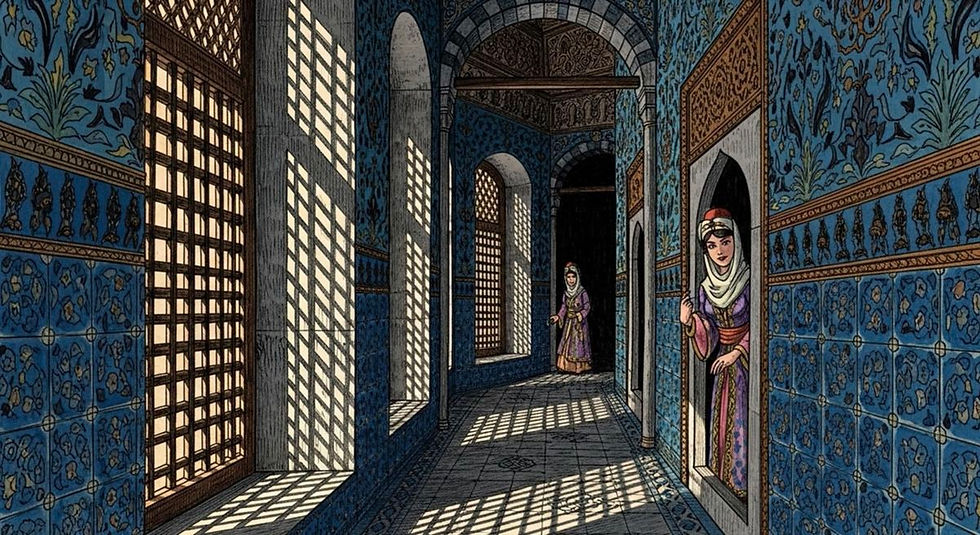
There is a reason people walk into the Blue Mosque, glance upward, and instinctively fall silent. It is not only the scale of the architecture or the filtered daylight pouring through stained glass. It is the sea of blue, turquoise, emerald, and coral red that seems almost impossible to believe was painted by hand. Those are İznik tiles, one of the greatest achievements in the history of Turkish ceramics and ceramic art.
What makes them even more remarkable is that they began as something surprisingly ordinary: clay, quartz, minerals, and the imagination of master craftsmen.
Centuries before industrial production made ceramics commonplace, the artisans of İznik transformed humble materials into objects worthy of sultans. Their work covered palace walls, decorated imperial mosques, and traveled across continents as prized diplomatic gifts. Today, these masterpieces continue to define Turkish ceramics, inspiring artists, collectors, and designers around the world.

When Clay Became a Luxury
The story begins in the small town of İznik, nestled beside a lake in northwestern Anatolia. During the fifteenth century, as the Ottoman Empire expanded into one of the world's most influential powers, so did its appetite for exceptional art. Architects wanted buildings unlike anything Europe or Asia had seen. The court wanted beauty that reflected imperial confidence. Ordinary pottery was no longer enough.
This demand sparked one of history's most fascinating breakthroughs in ceramic craftsmanship.

Unlike traditional pottery, İznik artisans relied on a mixture containing an unusually high proportion of finely ground quartz rather than clay alone. The result was a brilliant white body that resembled porcelain, even though true porcelain production had not yet been mastered in the Ottoman world. This smooth surface became the perfect canvas for incredibly detailed painting.
The innovation changed the future of Turkish ceramics. Delicate floral motifs, elegant calligraphy, and intricate geometric designs suddenly appeared brighter and sharper than ever before. A simple piece of clay art had become something that rivaled precious stone.
The Secret Ingredient Was Never Really Clay
One of the biggest surprises about İznik ceramics is that clay was never the whole story.
Modern scientific studies have shown that many authentic İznik pieces contain more quartz than clay. Finely ground glass was often added to help bind the mixture together during firing, creating a remarkably durable ceramic body. It was a sophisticated formula that required careful control long before laboratories and digital thermometers existed.
Then came the colors.

The deep cobalt blue that first made İznik famous reflected centuries of artistic exchange stretching from China through Persia into the Ottoman Empire. Turquoise quickly followed, becoming one of the defining colors of Turkish ceramic art. Rich greens appeared during the sixteenth century, while the famous raised coral red, known today as Armenian bole, became the workshop's signature achievement.
That extraordinary red still fascinates historians and conservation experts. Unlike ordinary painted pigments, it sits slightly above the glazed surface, giving the decoration a subtle texture that can actually be felt with a fingertip. Many modern ceramic artists have attempted to recreate it, yet producing the same vibrant result consistently remains remarkably difficult.
Sometimes the greatest masterpieces are remembered not for what everyone understands, but for what nobody can fully explain.
Every Flower Had Something to Say
At first glance, İznik tiles appear to be covered with beautiful gardens. Look closer, and those flowers begin telling stories.
The elegant tulip became one of the defining symbols of the Ottoman Empire, representing both refinement and spiritual beauty. Long before Europe experienced its famous Tulip Mania in the seventeenth century, Ottoman artists were already celebrating the flower across Turkish ceramics and palace decoration.

Carnations often symbolized happiness and vitality. Hyacinths brought rhythm to repeating patterns. Cypress trees suggested eternity and resilience. Pomegranates hinted at abundance and prosperity. Even the curling cloud bands that drift through many compositions reveal influences reaching all the way back to Chinese decorative traditions carried westward along trade routes.
These were never random decorations. Every brushstroke reflected a world where nature, faith, and imperial identity were deeply connected.
It is one reason authentic ceramic art from the Ottoman period still feels surprisingly modern. The patterns remain balanced, uncluttered, and full of movement, despite being more than four hundred years old.
Twenty Thousand Reasons the Blue Mosque Feels Different
Few places demonstrate the power of Turkish ceramics better than Istanbul's Blue Mosque.
Despite its popular name, the building was never officially intended to be "blue." The nickname emerged because its interior is decorated with more than 20,000 handmade İznik tiles, many featuring brilliant shades of blue alongside green, turquoise, and red.

What visitors often overlook is how carefully those tiles were positioned. The architects understood that natural light changes throughout the day, causing the glazed surfaces to reflect different tones as sunlight moves across the interior. Morning and afternoon offer entirely different experiences, making the mosque feel almost alive.
The walls do not simply display ceramic art. They interact with light.
This marriage of architecture and Turkish ceramics helped define Ottoman design and continues to influence contemporary ceramic artists searching for the same harmony between material and space.
Success Became Its Greatest Challenge
Ironically, the extraordinary popularity of İznik ceramics contributed to their decline.
By the late sixteenth century, demand had become enormous. Imperial commissions continued, but so did orders from wealthy patrons across the empire. Workshops expanded production to keep pace. As quantities increased, maintaining the same meticulous standards became increasingly difficult.

Economic pressures followed. Political instability affected royal patronage. New artistic tastes emerged. By the seventeenth century, many workshops struggled to preserve the exceptional quality that had made İznik famous.
Production gradually shifted toward Kütahya, another important center of Turkish ceramics that developed its own distinctive style. While Kütahya never copied İznik exactly, it ensured that centuries of ceramic craftsmanship did not disappear entirely.
The golden age had ended, but the tradition survived.
Clay Still Remembers
Today, authentic İznik-inspired workshops continue producing handmade ceramics using techniques passed down through generations. Every piece still begins with earth, water, minerals, patience, and an artist's steady hand.

No machine can perfectly imitate the tiny variations left by a brush loaded with pigment. Look closely at two hand-painted ceramic plates, and subtle differences emerge in every petal, leaf, and curve. Those small imperfections are not flaws. They are proof that a human being created them.
Perhaps that explains why Turkish ceramics continue to captivate collectors centuries after the Ottoman Empire faded into history. They are more than decorative objects. They preserve forgotten technologies, artistic ambition, and stories painted onto clay.

The next time you encounter an İznik tile, whether in a historic mosque, a museum gallery, or a contemporary artisan's workshop, take a closer look. Beneath the brilliant glaze lies one of history's greatest conversations between art and science. Quartz became porcelain's rival.
Clay became imperial luxury. A flower became a symbol. And a small Anatolian town transformed Turkish ceramic art forever.


